Clearing Cloudflare Challenges in Real Automation
Data control is a real concern when every challenge gets shipped to a remote service. With CapSkip, nothing leaves your hardware, so private projects stay on your own systems. For regulated work, this can be the deciding factor.
Under the hood, reCAPTCHA v3 hands out a risk score based on watched signals instead of a single click. Producing a good score takes tooling designed for that model, which is exactly what CapSkip targets.
Fundamentally, a CAPTCHA solver reads a challenge and returns the solution a site expects, so an automated script can continue. What sets CapSkip apart is that the work stays on your own Windows machine - no challenge data is shipped off to a stranger, and you avoid per-CAPTCHA charges. This mix of control and predictable cost turns out to be a real advantage for steady workloads.
A common mistake is picking any solver as if interchangeable. Line up the solver to your CAPTCHA mix, your volume, and the budget - CapSkip covers the common types at one price, which fits the majority of everyday projects.
The developer API was built to emulate the request format of major CAPTCHA-solving services. What this means, scripts and tools that already call those services are able to point at CapSkip with little
See more than a URL change and zero coding.
Turnstile is now a common gatekeeper on pages that aim to block bots and
Learn More skip the usual image puzzles. CapSkip solves Turnstile locally in a few seconds, handling the challenge modes. For automation that run into Turnstile, this removes a real roadblock.
Evaluating solvers properly involves checking them on the same sites with matching proxies. On such an apples-to-apples footing, self-hosted fixed-price solving tends to come out strong for steady workloads.
reCAPTCHA v3 takes a different tack: rather than a visible challenge, it scores behavior silently. Producing a good score takes tooling that handles the way v3 works, and CapSkip is designed to do exactly that, producing results quickly so your flow keeps moving.
reCAPTCHA v2 is among the most widespread challenges on the web, from the classic checkbox to invisible and callback variants. CapSkip handles all of these on your own machine quickly, so your scraper will not grind to a halt whenever one appears. Since it emulates common solver APIs, wiring it in tends to be painless.
Turnstile has become a frequent gatekeeper on sites that aim to block bots without traditional image puzzles. CapSkip clears Turnstile locally in a few seconds, covering the challenge variants. For automation that keep hitting Turnstile, this takes away a real roadblock.
reCAPTCHA tokens often catch out automations that solve ahead of time. The trick is simply to request the token right before the moment you use it, and CapSkip returns fresh results quickly enough to make that simple.
A Selenium setup is a go-to for browser automation, and CapSkip fits right in. Your your driver logic as is and delegate the CAPTCHA to CapSkip when one appears, so the run continues with no manual steps.
Inventory tracking across many sites involves frequent hits, and plenty of of those pages guard themselves with CAPTCHAs. Solving the challenges on your hardware keeps the data current without runaway costs.
Under the hood, reCAPTCHA v3 assigns a risk score from observed signals rather than a one checkbox. Getting a usable token calls for a solver designed for that model, which is exactly what CapSkip is built for.
The GeeTest slider puzzles can be notoriously tricky for automation, which is why running a tool that supports them helps a lot. CapSkip handles GeeTest locally, so workflows that rely on those sites do not break when the challenge appears.
A migration plan keeps the switch painless: point your endpoint at CapSkip, verify a few real solves, and then flip the main jobs. Since the request format matches major services, the bulk of the work is already done.
Behind the scenes, reCAPTCHA v3 hands out a score based on observed behavior instead of a one checkbox. Getting a good score takes a solver designed for that approach, which is what CapSkip is built for.
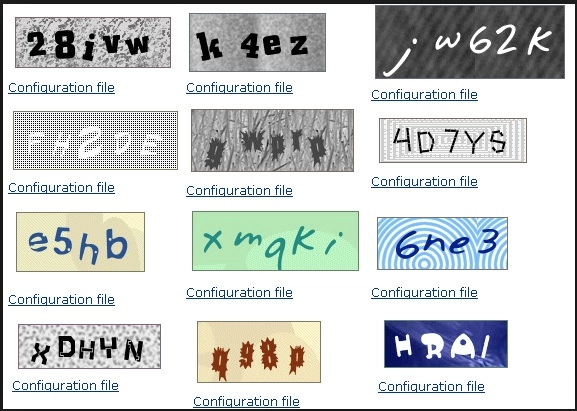
Image CAPTCHAs remain everywhere, on sign-up pages to registration flows. CapSkip recognizes a huge range of image CAPTCHA types on your own hardware, typically in about a tenth of a second. That kind of speed matters when you handle high volumes.
Beyond the API, CapSkip ships with client libraries and sample code that shorten integration time. Rather than hand-rolling low-level HTTP calls, developers can lean on ready-made clients across popular stacks.
Automated browsers expose fingerprints that detection systems watch for, so combining solid automation hygiene with dependable CAPTCHA solving matters. CapSkip covers the challenge half while you concentrate on the browser side.
Datacenter IP pools and datacenter ones behave in different ways under detection scrutiny. Whatever blend your setup run, CapSkip solves the CAPTCHA on your machine without adding an external hop to the chain.